How It Works
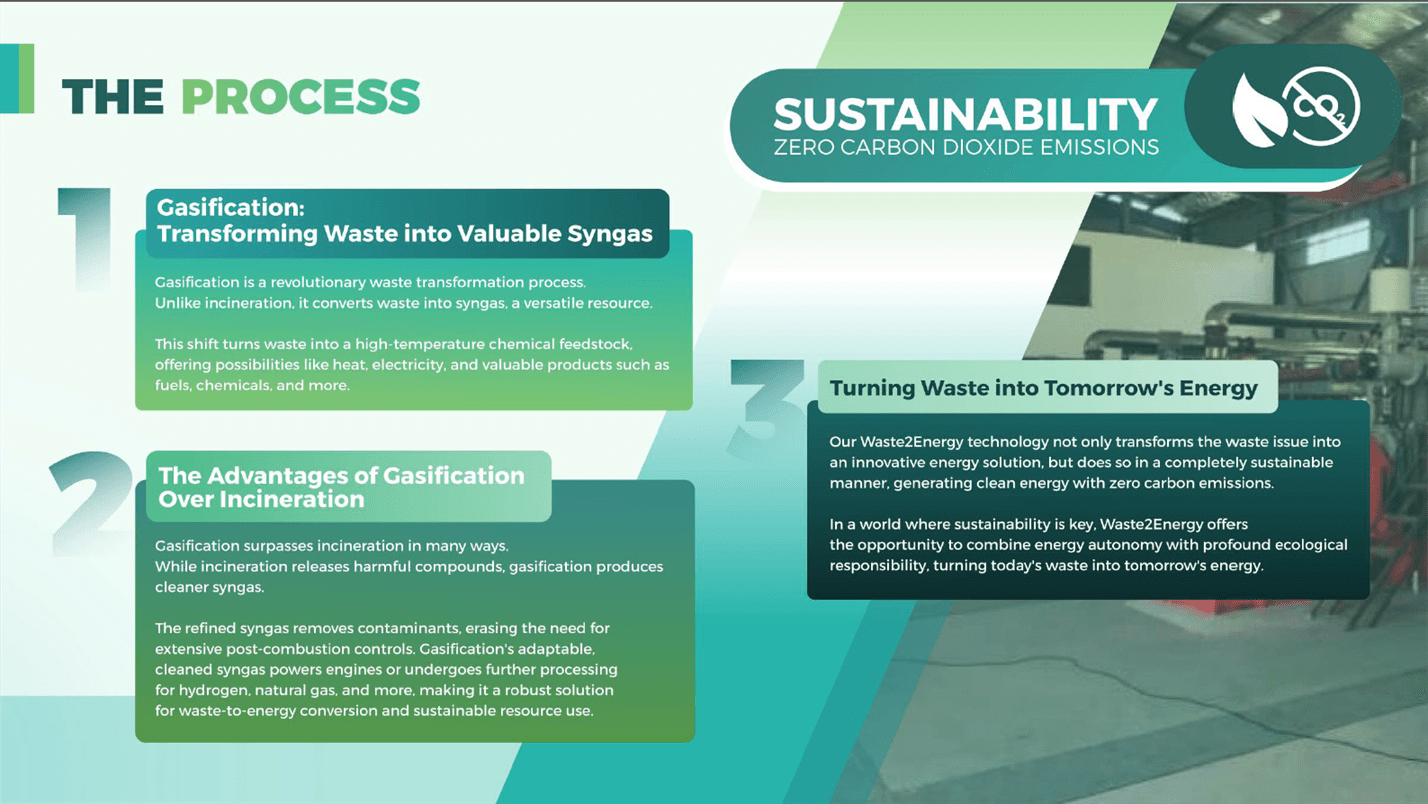
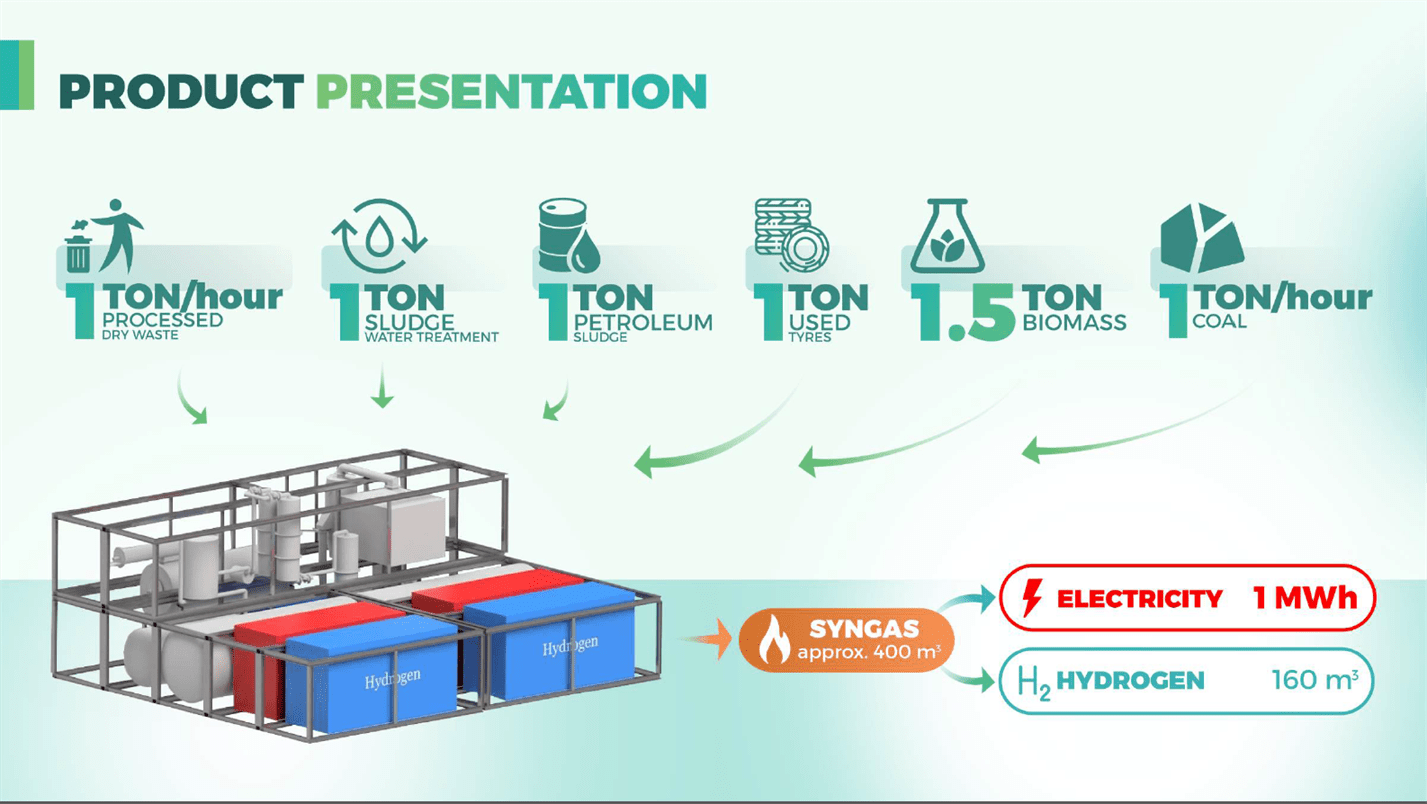
The Waste2Energy process transforms urban waste into useful energy through controlled molecular disintegration technology, which converts organic and inorganic materials into synthetic gas (**SynGas**), harnessed to generate electricity and hydrogen.
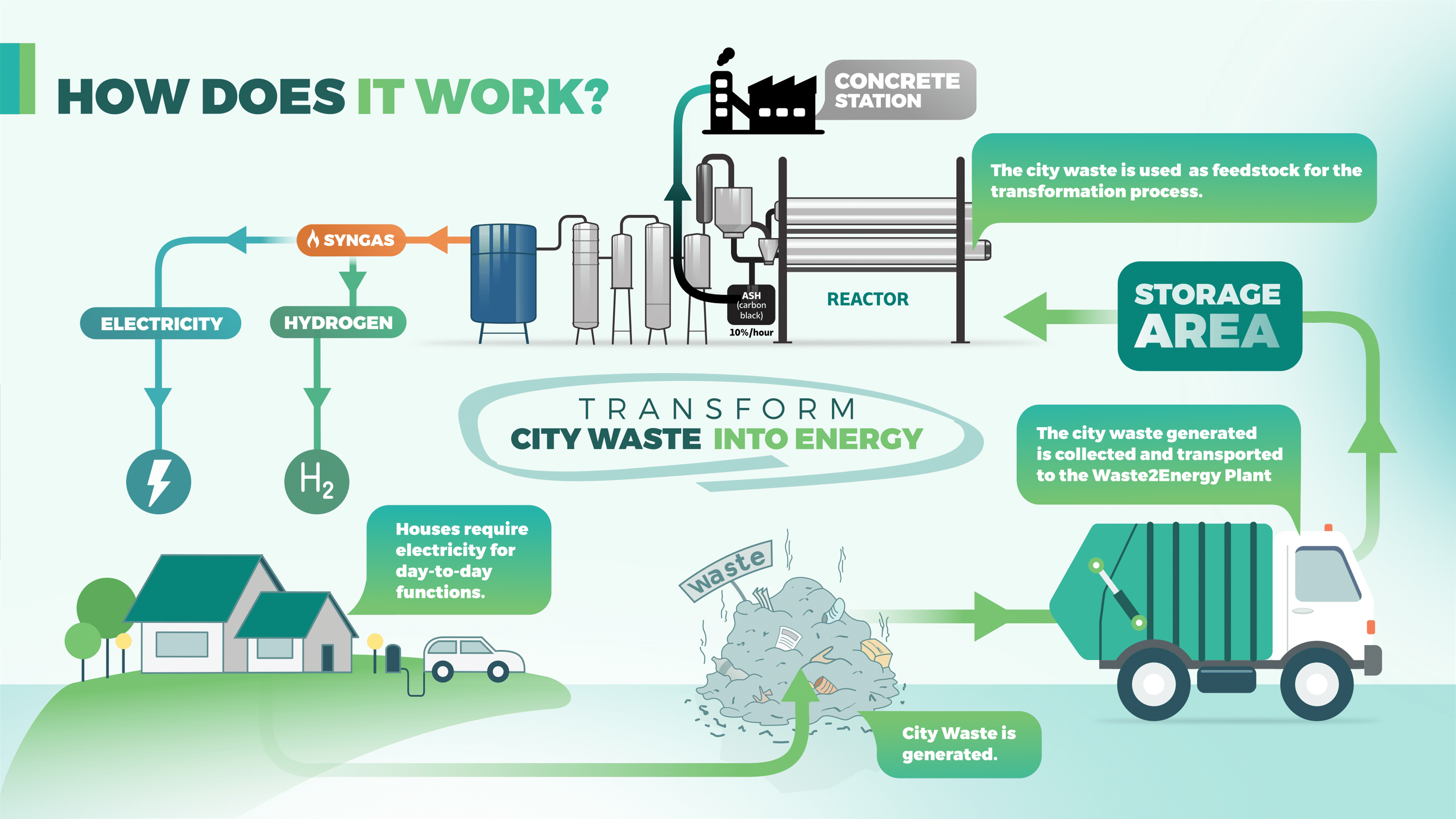
Molecular disintegration refers to the process where chemical bonds within a molecule are broken, leading to the separation of atoms or fragments of the original molecule. This can occur due to various factors, but in our technology, we use extremely high temperatures.
Molecular disintegration is a process for treating organic or inorganic materials that involves their partial decomposition at high temperatures, between 680 and 1100°C, under insufficient or zero oxygen conditions, to convert the waste into a synthetic gas called **SynGas**. This gas contains substances such as carbon monoxide, hydrogen, methane, and carbon dioxide.
Through this process, organic or inorganic materials decompose at a molecular level, and the resulting gas is used to generate electrical and thermal energy. High-temperature thermal decomposition has many benefits, such as reducing waste volume and generating energy from waste.
However, harmful contaminants can be released into the atmosphere if not done in a controlled manner, which could negatively impact human health and the environment. We have carried out and stabilized this process according to strict regulations to ensure it is safe and environmentally sustainable.